

Dr. Bilal Butt directs the Critical Environmental Geopolitics Research Group. He is a Professor in the School for Environment & Sustainability at the University of Michigan, and a faculty affiliate of the Science, Technology, and Public Policy Program, African Studies Center, and the Center for Global Health Equity.
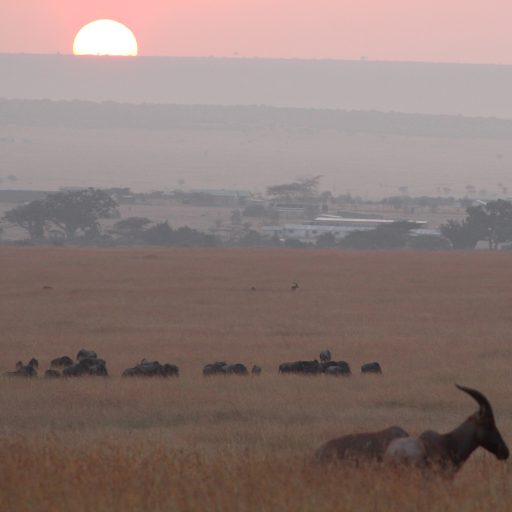
His core research sits at the intersection of environmental justice and (critical) environmental geopolitics. He contextualizes his work against three sub-areas:
(1) the environmental politics of life and death;
(2) environmental and social change under uncertainty in East African drylands, and
(3) environmental and health dynamics in the tropics.
He examines how the ever-expanding tentacles of capitalism have infiltrated new forms of socio-environmental life and the volatility of climate change have resulted in transformations of political institutions, sociotechnical knowledge, and material environments. His research asks how these transformations are affecting the lives and environments of some of the poorest and most vulnerable people on the planet. EJ’s research attention to Black Indigenous and People of Color (BIPOC) has helped to unveil how processes of industrialization, state capture, techno-politics, neoliberalism, and capitalism have led to bodily harm and enhanced vulnerability to climate change.
Critical Environmental Geopolitics brings a multi-theoretical toolkit to help understand why these changes are occurring and identify their impacts. Geopolitics also centers on spatiality, place, and power relations as key components for understanding the interactions between both human and non-human actants. By engaging with theories, mixed methods, and fieldwork, we can delve deeper into how environmental problems are created and the devastating outcomes affecting indigenous communities.
Dr. Butt received the National Science Foundation’s Career Award and is a recipient of the Superior Teaching Award from the University of Michigan. He has published in diverse journals such as the Annals of the Association of American Geographers, Remote Sensing of Environment, Journal of Applied Ecology, and Humanity. He teaches courses on Conservation, Development and Environmental Justice, Political Ecology and Environmental Violence Conflict, Environmental Governance, and Preparing for International Fieldwork.
His publications can be accessed through Google Scholar and ORCID.
RESEARCH ACTIVITIES
Intersections Between Environmental Justice and Geopolitics
Critical Environmental Geopolitics is concerned with applying an interrogative lens to the intersections between the environment (material and non-material) and the actors and institutions that are enmeshed in geopolitics. The field privileges inquiry that is rooted in social justice, activism, and inequality, and uses geographers’ multi-dimensional use of space as a critical tool to diagnose environmental and social problems. Environmental justice (EJ) and geopolitics have traditionally been considered separate disciplinary spheres. However, the ever-expanding tentacles of capitalism into new forms of socio-environmental life, combined with the volatility of climate change, have resulted in transformations of political institutions, sociotechnical knowledge, and material environments. Conceptually, the effects of these transformations are not easily understood through conventional disciplines due to disciplinary policing, the unequal power relations between academic authors from the Global North working in the Global South, as well as the lack of empirical rigor associated with long-term and place-based research involving local peoples.
My research at the intersection of environmental justice and critical geopolitics asks how these transformations are affecting the lives and environments of some of the poorest and most vulnerable people on the planet. EJ’s research attention to Black Indigenous and People of Color (BIPOC) has helped to unveil how processes of industrialization, state capture, techno-politics, neoliberalism, and capitalism have led to bodily harm and enhanced vulnerability to climate change. Critical Environmental Geopolitics brings a multi-theoretical toolkit to help understand why these changes are occurring and identify their impacts. Geopolitics also centers on spatiality, place, and power relations as key components for understanding the interactions between both human and non-human actants. By engaging theories such as Foucault’s biopolitics, biopower, Agamben’s thanatopolitics, and Mbembe’s Necropolitics, we can dive deeper into how environmental problems are created and the vicious outcomes affecting indigenous communities.
A hallmark of my research has been the deep empiricism and rigor I bring to understanding environmental justice and critical geopolitics. This empiricism is drawn from the use of mixed methods that include: ethnographic methods (such as key informant interviews, survey/panel data, home-stays, and group workshops); geospatial data science methods (such as the integrated use of global positioning systems, remote sensing, and geospatial analysis), and statistical analysis (such as the use of regressions, species distribution models fitted using Hierarchical Modeling of Species Communities and Markov Chain Monte Carlo simulations). I often organize the work from conceptualization to publication and engagement. By doing place-based research that recognizes local people’s perspectives and contexts, I can offer an analysis that is more accurate and nuanced, and thus has the potential to be more impactful for environmental justice efforts.
The Environmental Politics of Life and Death
This area of research has drawn on theoretical insights from philosophers to understand how we make choices about who lives and who dies, and to engage these ideas with contemporary environmental challenges. I explore racial, class, gender, and power dynamics in many of these studies to uncover the paradoxes in solutions to environmental problems.
In one recent paper, we advance conversations on how the increasing mechanization and automation of dairy farms induce a particular kind of thanatopolitics (the politics of death) (Klasky and Butt 2023). We point to a paradox that exists in dairy farming, where the cow is useful (milking) until it is no longer capable of producing milk and is culled. We show how different philosophers have had to contend with the politics of death. We examine how welfare certification, labeling schemes, and agricultural technology in the dairy industry facilitate material and discursive changes in producer and consumer relations. We then discuss how industrial transformations lead to this shift in bovine subjectivity.
Other research in this area is shown in de Jong and Butt (2023) in “Conservation Violence: Paradoxes of “Making Live” and “Letting Die” in Anti-Poaching Practices” published in Environment and Planning E: Nature and Space.
Environmental and Social Change Under Uncertainty in East Africa
A second theme of my recent research builds on understanding environmental and social change among pastoralists in dryland Africa. This research is concerned with understanding how development interventions by the Global North, designed to alleviate the suffering of marginal pastoralists, have severe consequences that differ from how development organizations intend. This research reveals that these interventions aren’t a case of well-intentioned development gone awry, but instead demonstrate the intentionality of conservation and development organizations in bringing pastoralists under the control of the state and various neoliberal enterprises. These interventions have taken the form of land management, such as shifts from collectivization to privatization (Butt 2016, Butt 2015, de Bruijn et al. 2022, Schriver et al. 2023), or livestock off-take schemes that are designed to cushion pastoralists from the effects of severe droughts (Butt 2024). In other cases, infrastructure development through mobile communications is perceived to provide solutions to market failures, yet can result in the formation of elites that concentrate power and information flows in the hands of a few (Butt 2015).
Environment and Health Dynamics in the Tropics
A third area of research is in environment and health dynamics. Starting with early work looking at Q Fever among camels in northern Kenya (Benka et al. 2014), I have since formulated research that examines the interactions between smallholder livestock keepers, the environment, and human health (Butt 2016). My research framework revolves around understanding how epizootic disease transmission occurs between humans and livestock. I rely on tracking spatially explicit movements to decipher the spatial and temporal zones of interactions (Hedman et al. 2020). Additionally, I am interested in how development interventions that are meant to alleviate the material and social conditions of the rural poor can have adverse effects.
These engagements in the field of global health equity have led to new lines of research on how pastoralists are being affected by climate change. Drylands are experiencing some of the most rapid shifts in climate today, with global climate models predicting that drylands are likely to experience profound disruptions to the frequency, intensity, and duration of extreme events such as droughts and floods. The implications for human health are concerning. Pastoralists also face significant health equity challenges from the politics of public health efforts, where access to reliable health centers is influenced by external funding from volunteer organizations, state oversight, and a lack of adequate knowledge among public health practitioners.
 Critical Environmental Geopolitics Research Group
You must be logged in to post a comment.